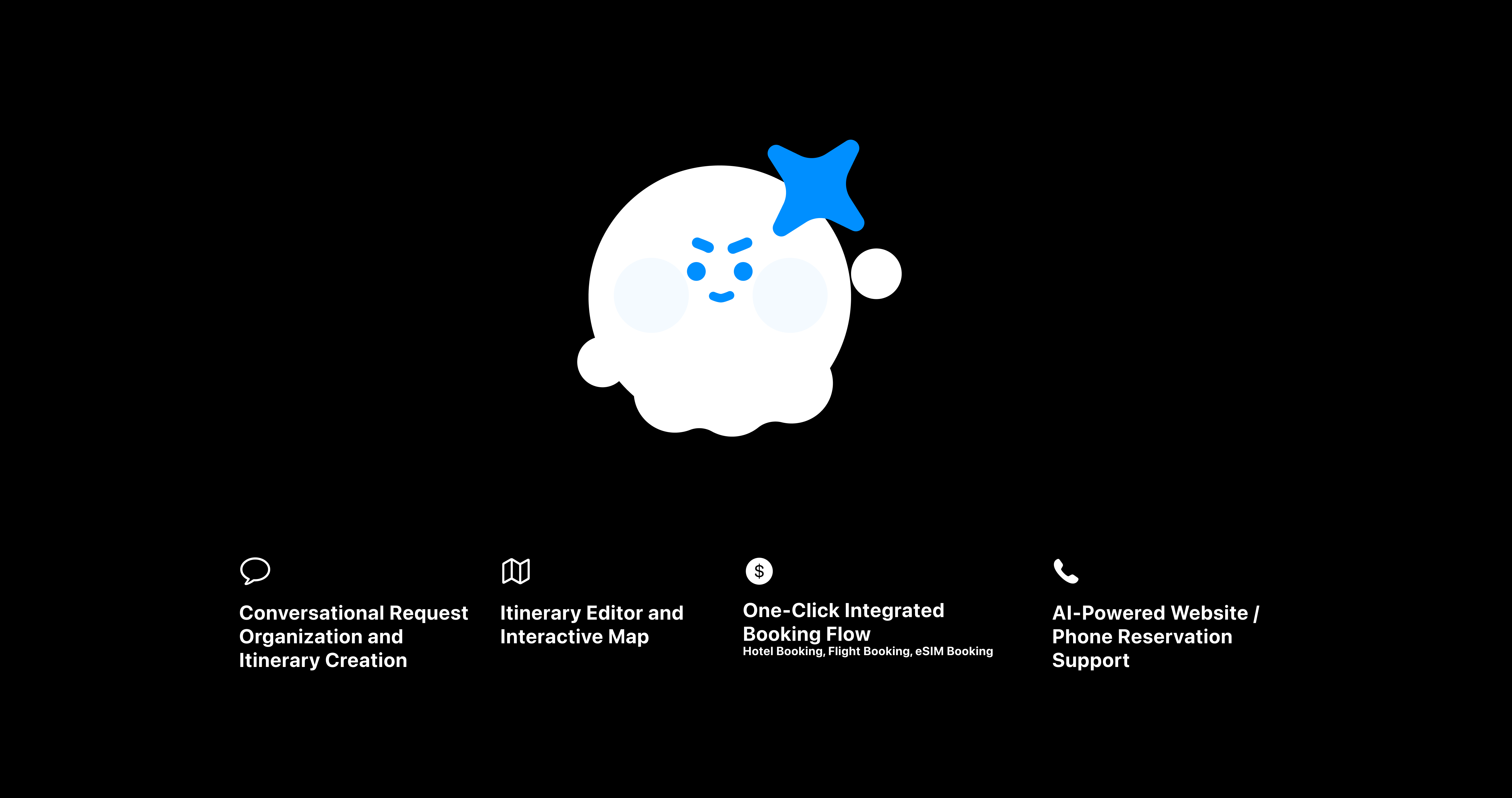
PickTrip reframes travel planning as one continuous AI-powered journey, connecting discovery, editing, booking, and execution instead of leaving them scattered across separate tools.
Planning a trip usually means jumping between chat threads, social posts, blogs, Google Maps, hotel sites, airline platforms, and scattered notes. People often have to make decisions before their needs are even fully defined, and once an itinerary is drafted, later tasks such as revisions, collaboration, price comparison, booking, reminders, and on-trip changes are still fragmented across different services. PickTrip starts from that friction. The goal is to turn this broken process into a more coherent experience, where travelers can begin with a natural conversation, gradually clarify what they want, and continue within the same system from planning to execution.
From vague intent to an editable itinerary
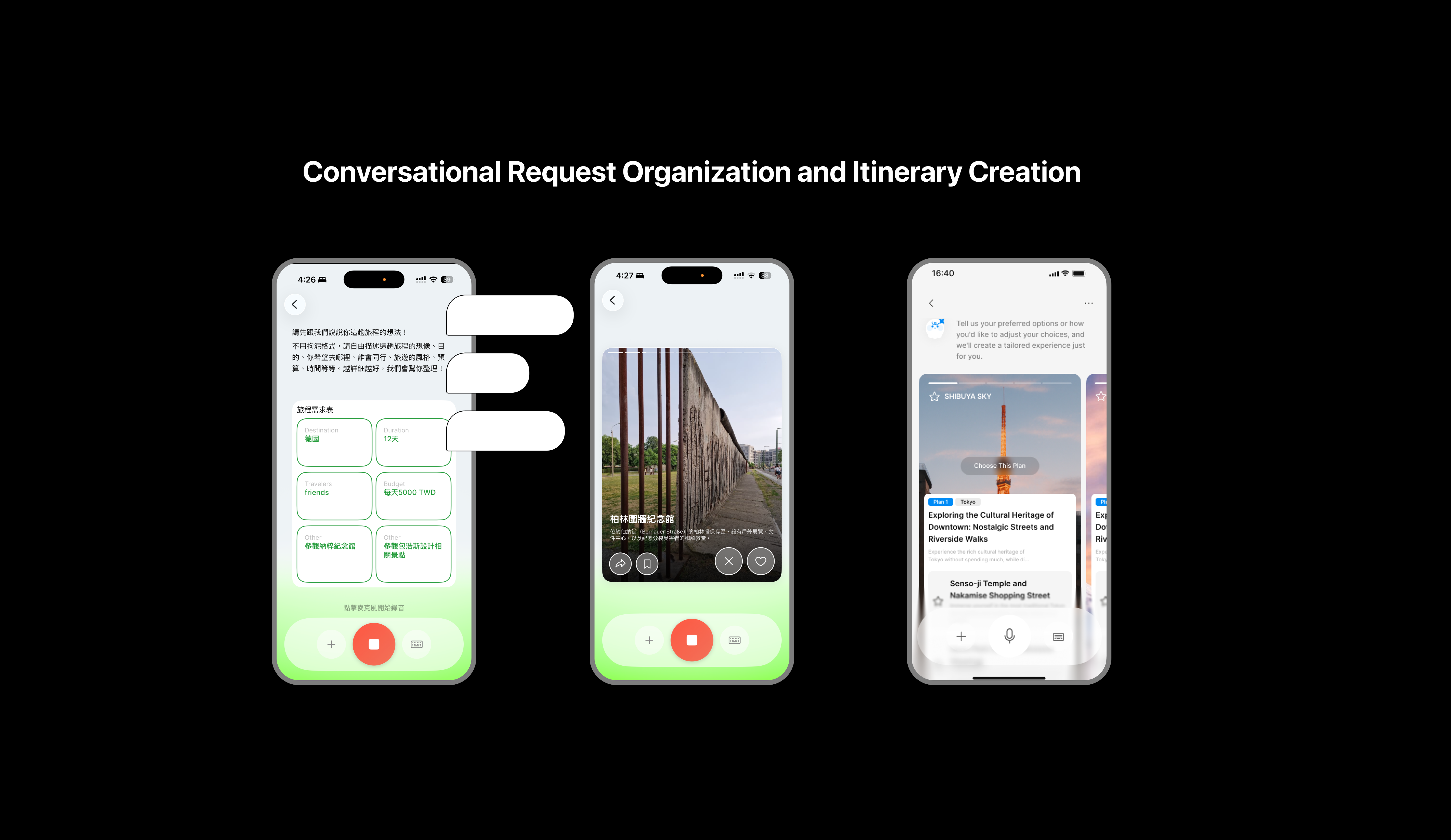
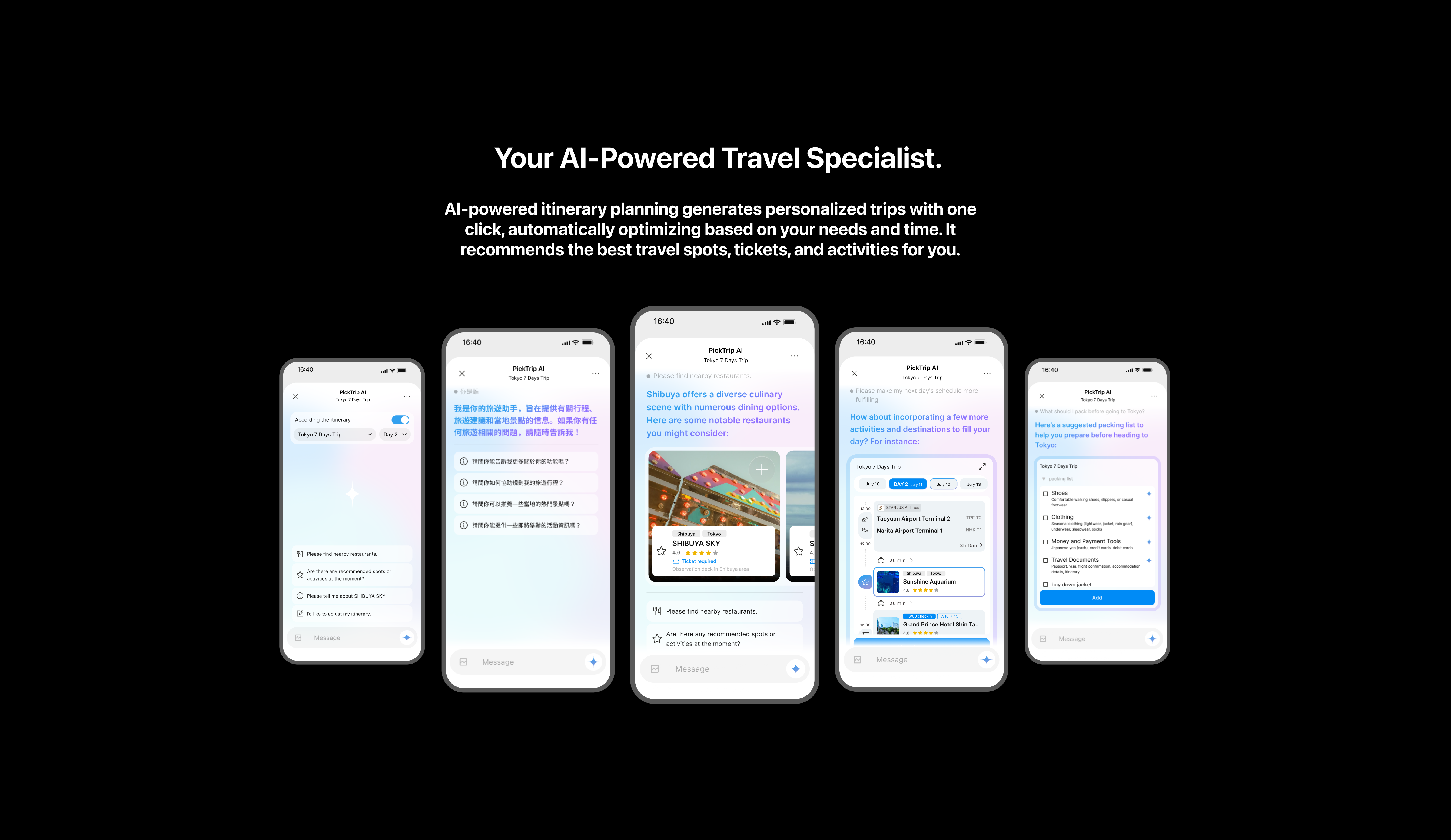
Instead of forcing users through a long form, PickTrip uses an AI consultant-style conversation to understand destination, duration, budget, travel style, companion preferences, and timing constraints, then compresses those signals into a plannable brief. The itinerary planning engine turns that brief into an editor-ready draft by balancing location logic, travel distance, pacing, and preference matching. For me, the important point is not generating a polished paragraph of recommendations, but producing a travel state that can actually be edited, validated, and acted on. The itinerary becomes a decision-making surface, not just a nice-looking output.
Shared editing, partial replanning, and group coordination
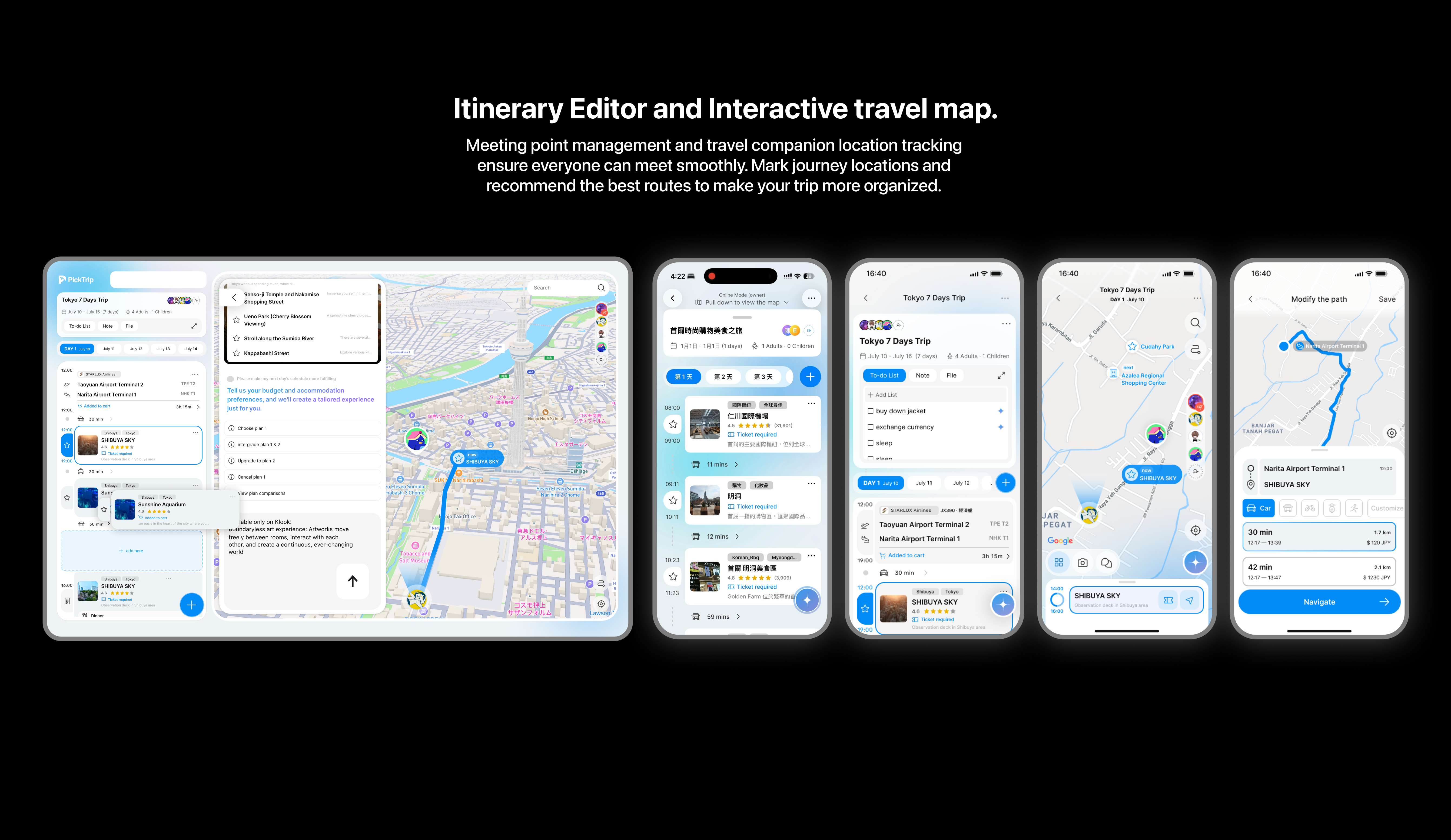
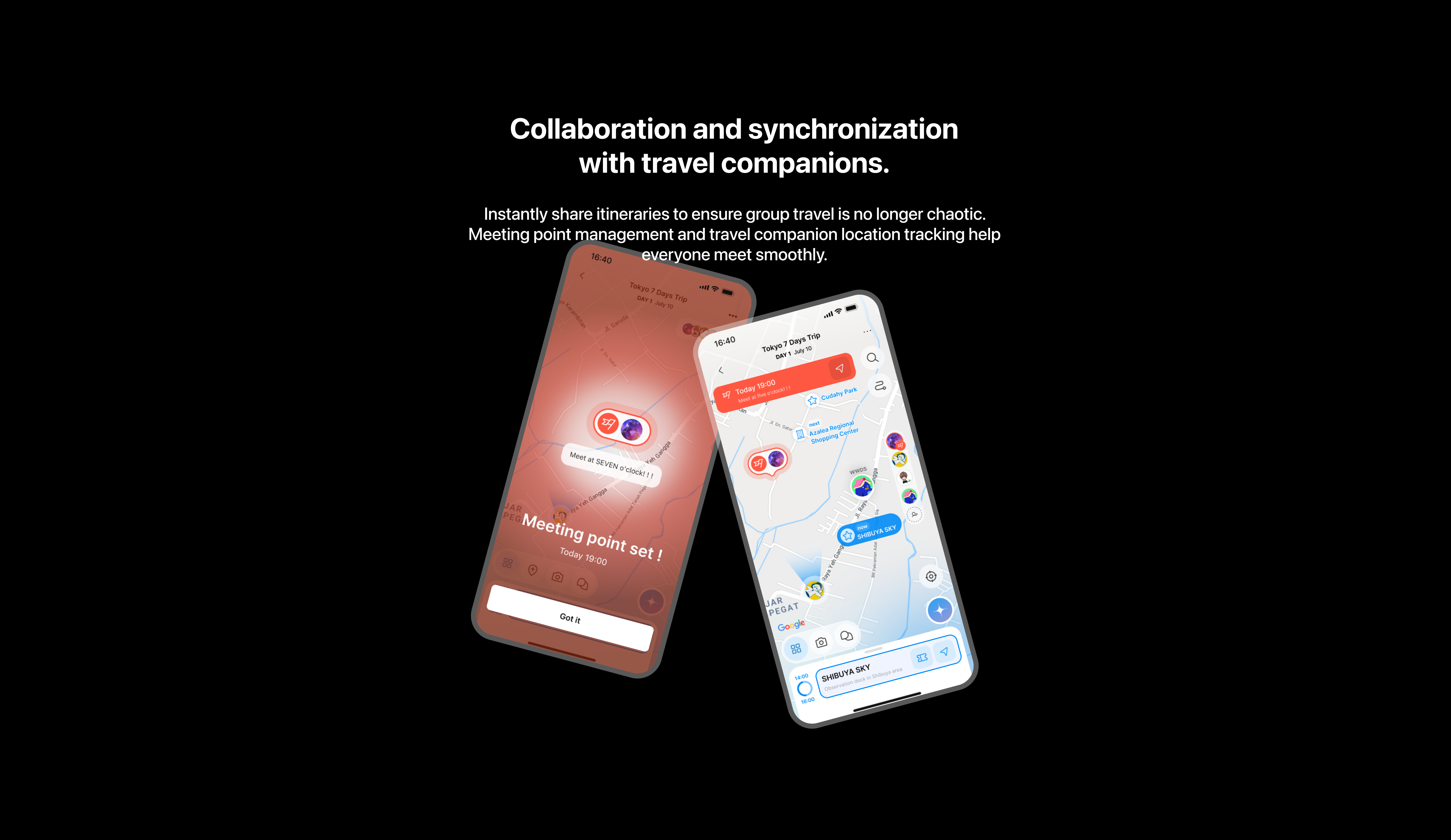
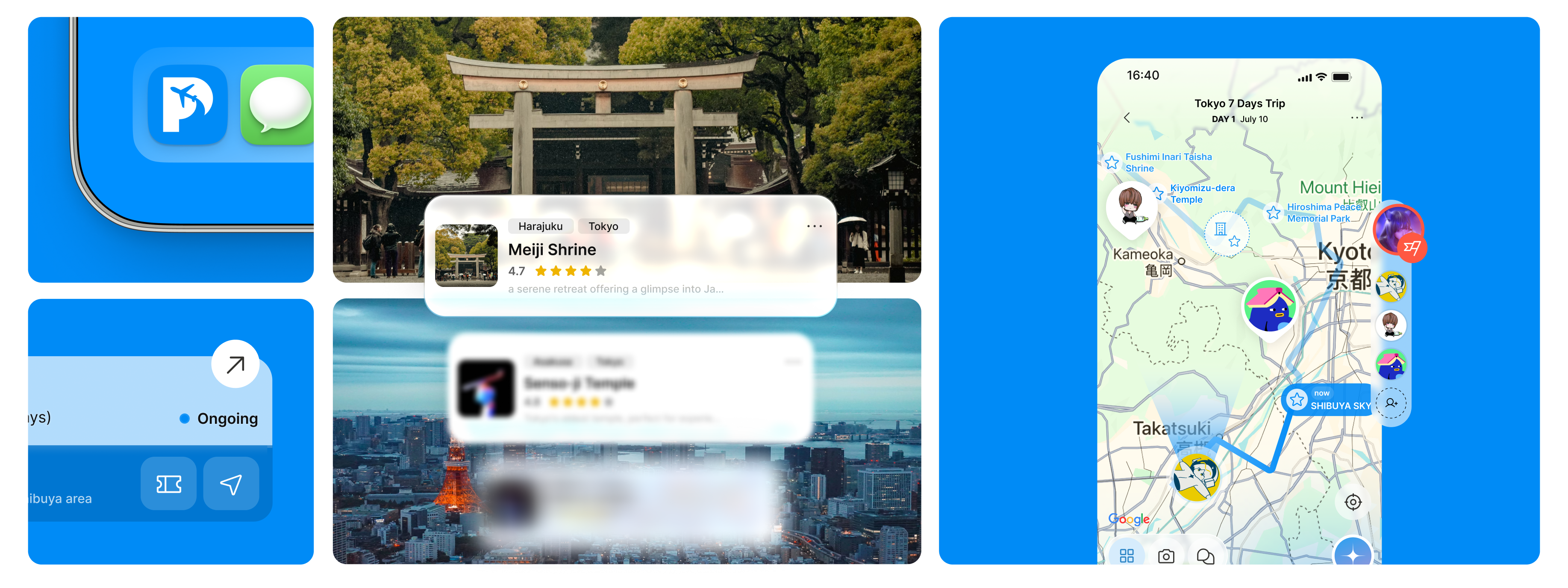
Trips are rarely shaped by one person alone, especially in group travel where tastes, budgets, and rhythms differ. PickTrip therefore treats the itinerary as a living document rather than a static PDF. Travelers can drag, delete, insert, and reorder items inside a shared editor, while companions can collaborate on the same plan. When reality changes—someone feels unwell, the weather shifts, or a new stop needs to be inserted—the AI can replan only the affected section instead of regenerating the entire trip. This makes the itinerary something that evolves with real situations rather than something that expires the moment it is generated.
Extending planning into booking and fulfillment
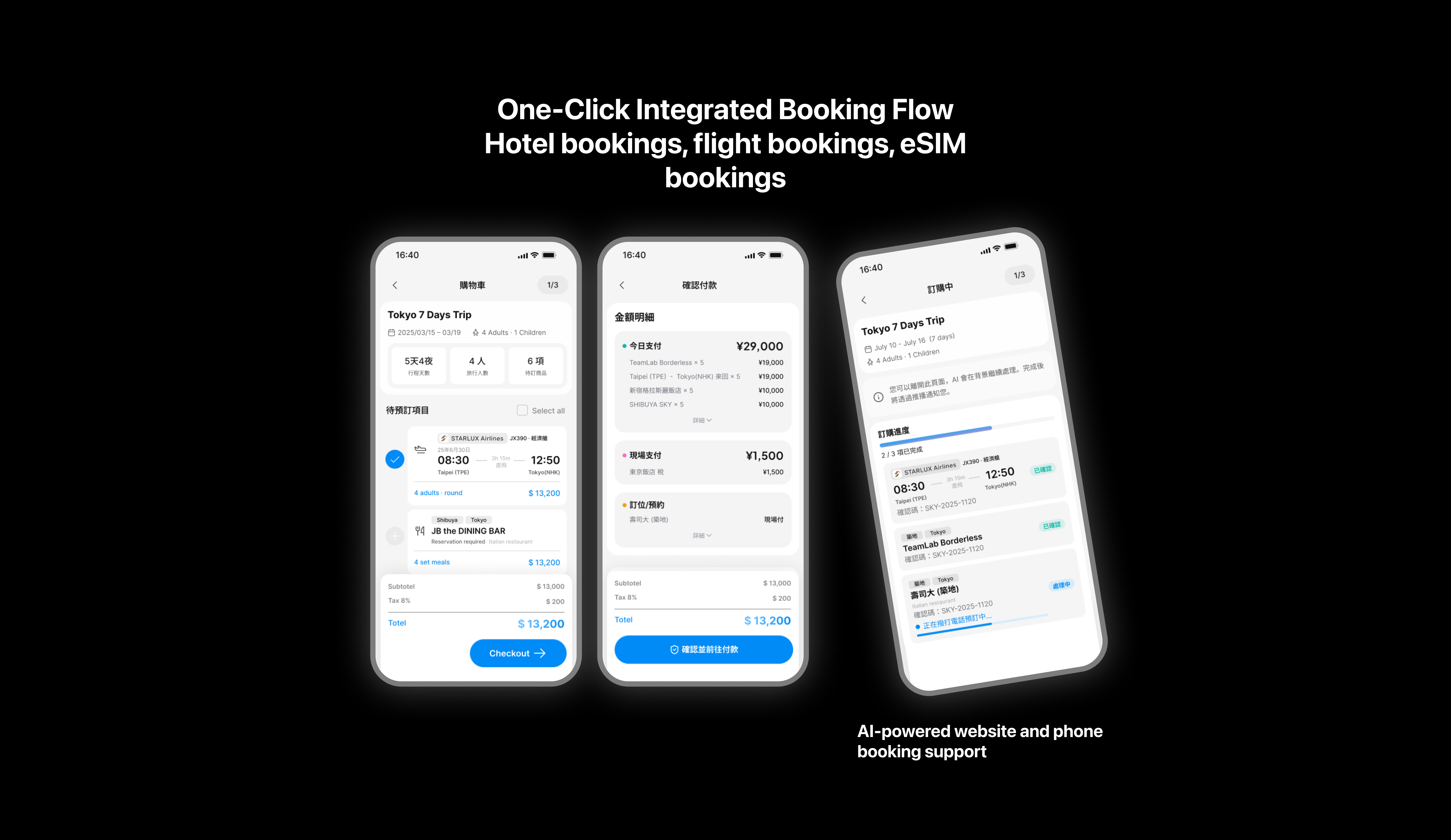
PickTrip is not only about generating plans. In its fuller product vision, the system identifies bookable nodes inside the itinerary and translates them into concrete commerce intents, connecting the planning layer with Hotel, Flight, eSIM, and ticket booking flows. That means users do not have to leave the context of their trip just to compare offers, add items to cart, pay, and manage follow-up steps. When direct APIs are unavailable, the platform also explores AI-assisted website or phone booking as an operational layer. From pre-trip reminders and packing lists to real-time recommendations, itinerary changes, document reminders, and budget tracking during the trip, PickTrip is designed as a companion system that can stay useful before departure, during travel, and into the preparation of the next journey.
Design perspective
For me, the core of this project is not simply inserting AI into travel. It is about redefining where a travel product begins and ends. Instead of stopping at search results, recommendation cards, or isolated booking tools, I wanted to think through a continuous experience that spans discovery, itinerary generation, collaborative editing, booking, fulfillment, and memory write-back. In that sense, PickTrip is more than an itinerary assistant. It is a product prototype moving toward an AI travel execution platform—one that reduces cognitive load, supports shared decisions, and makes travel planning feel more executable, more adaptive, and more alive over time.