CREDIT
素材研究・設計:陳冠宇
Burning is a process in which energy penetrates matter, leaving behind traces, trajectories, and forms that remain still after the flow.
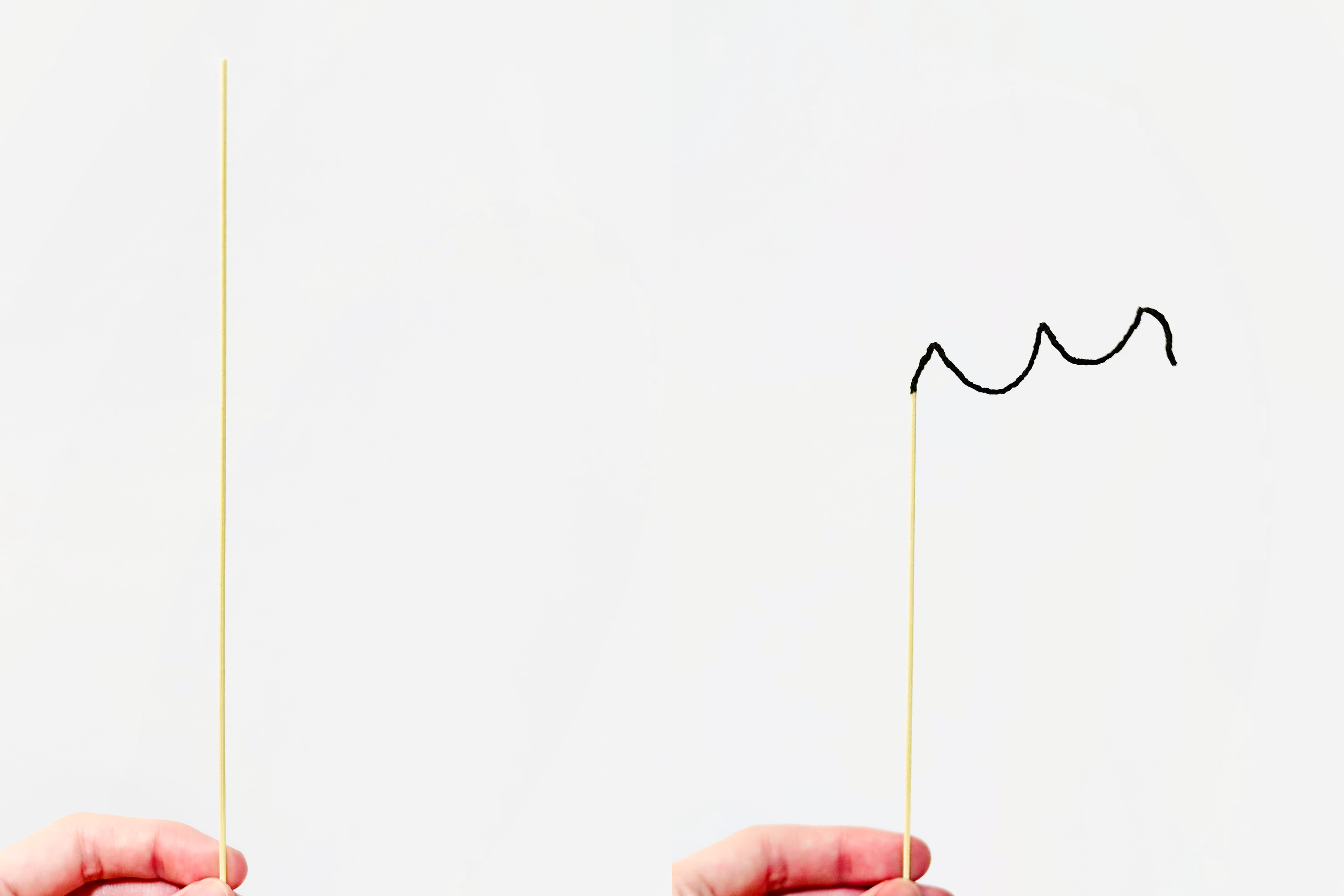
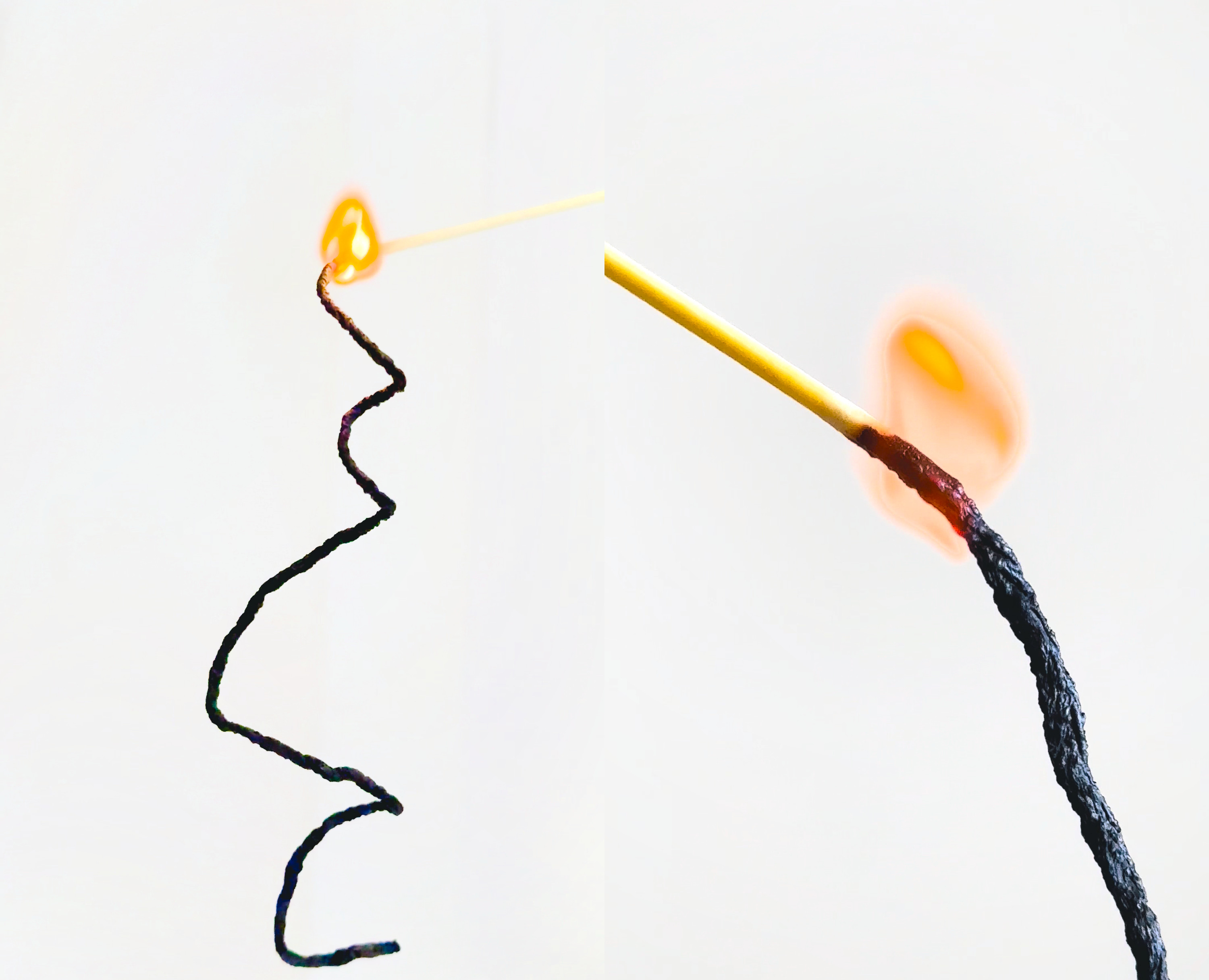
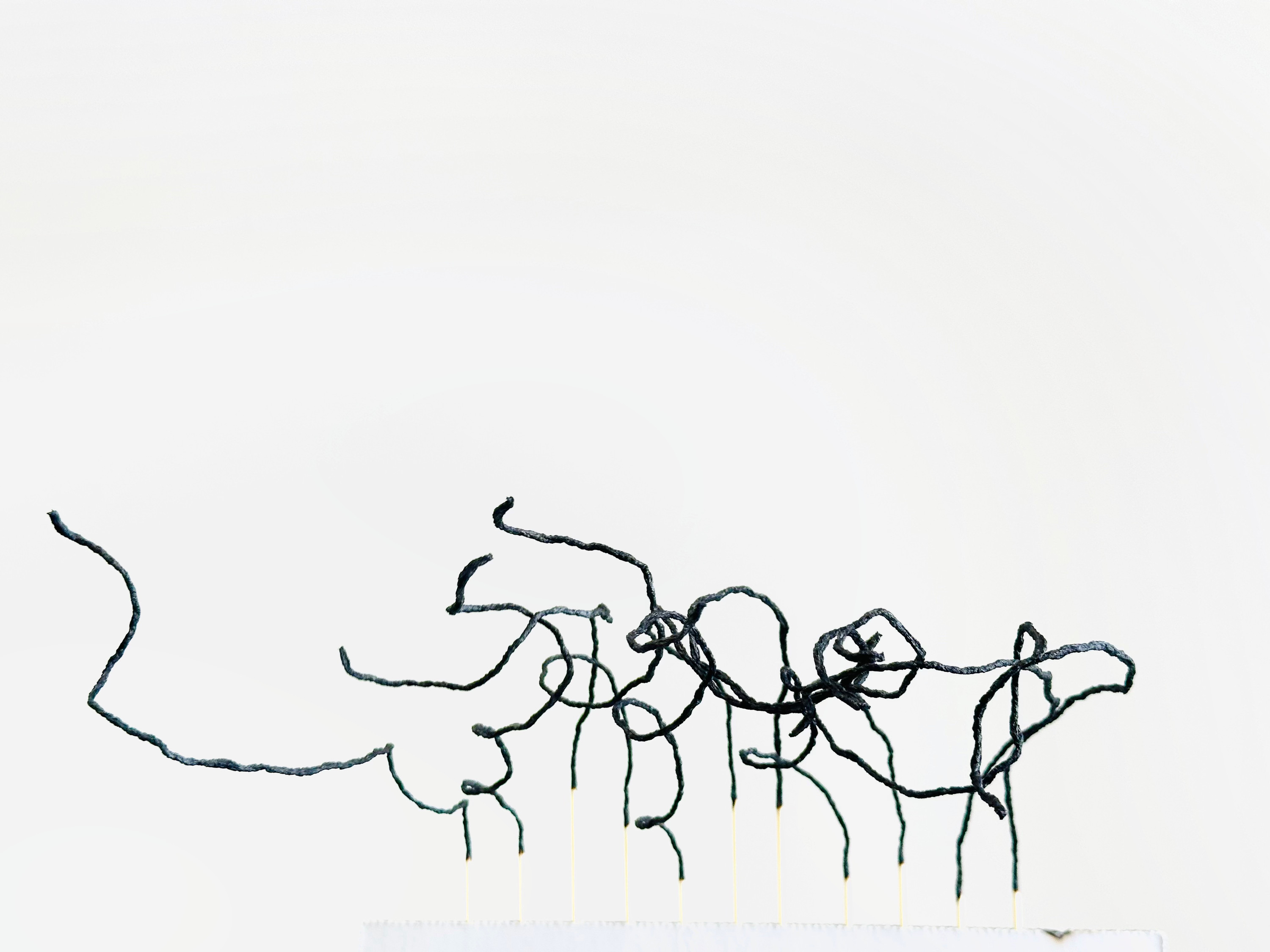
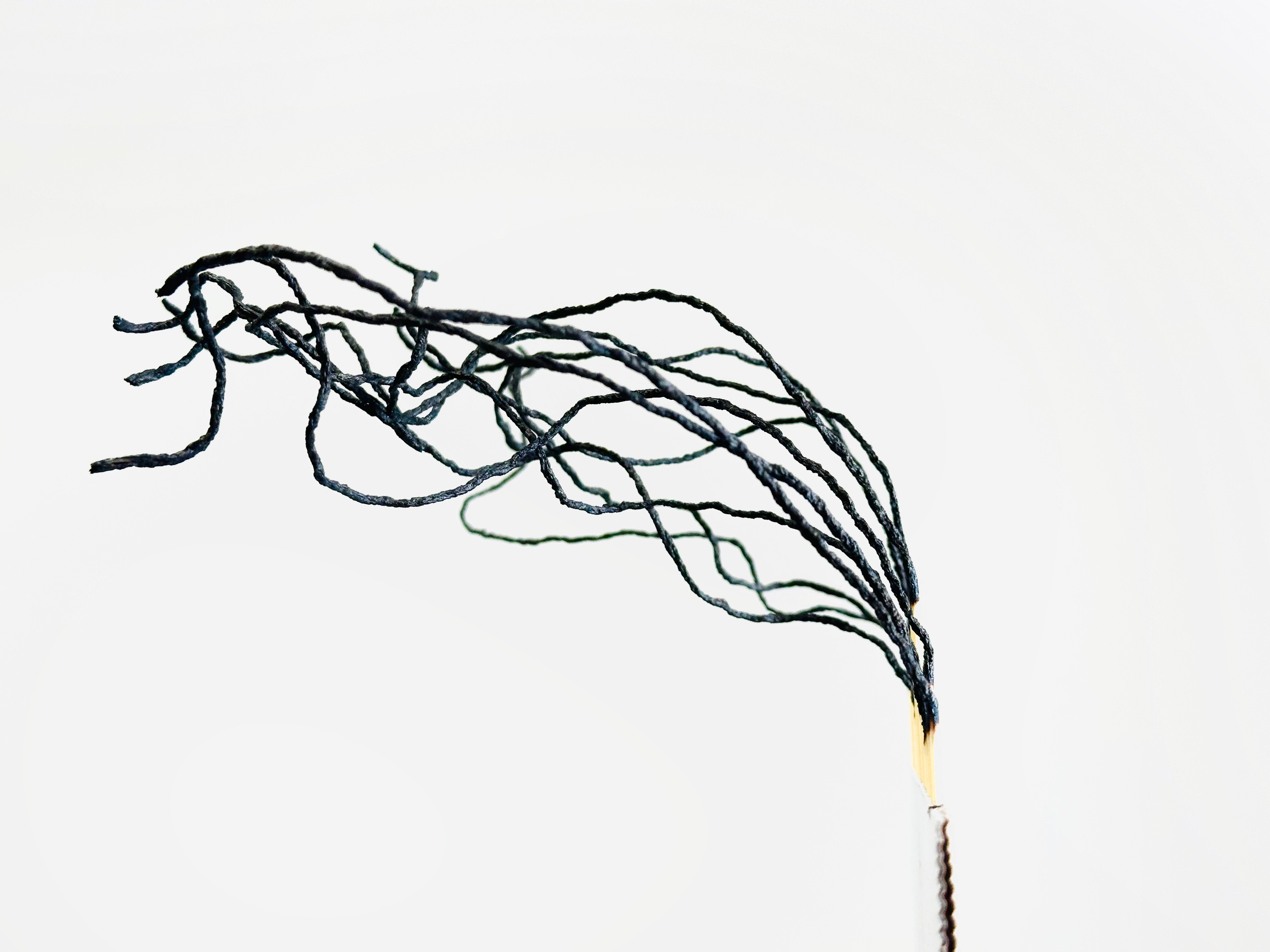
Noodles are sources of energy, the fuel for life. Moe-ru Men is a material study that starts from this everyday ingredient: I stood dry, straight noodles upright, lit one end, and let the flame travel along each strand, watching what form was left once the heat had passed through the material. The burned section turns black and curls, setting into a line that holds still in mid-air, while the part the fire has not yet reached keeps the noodle's original straight, yellow body.
Bending, twisting, fracturing: none of it is random
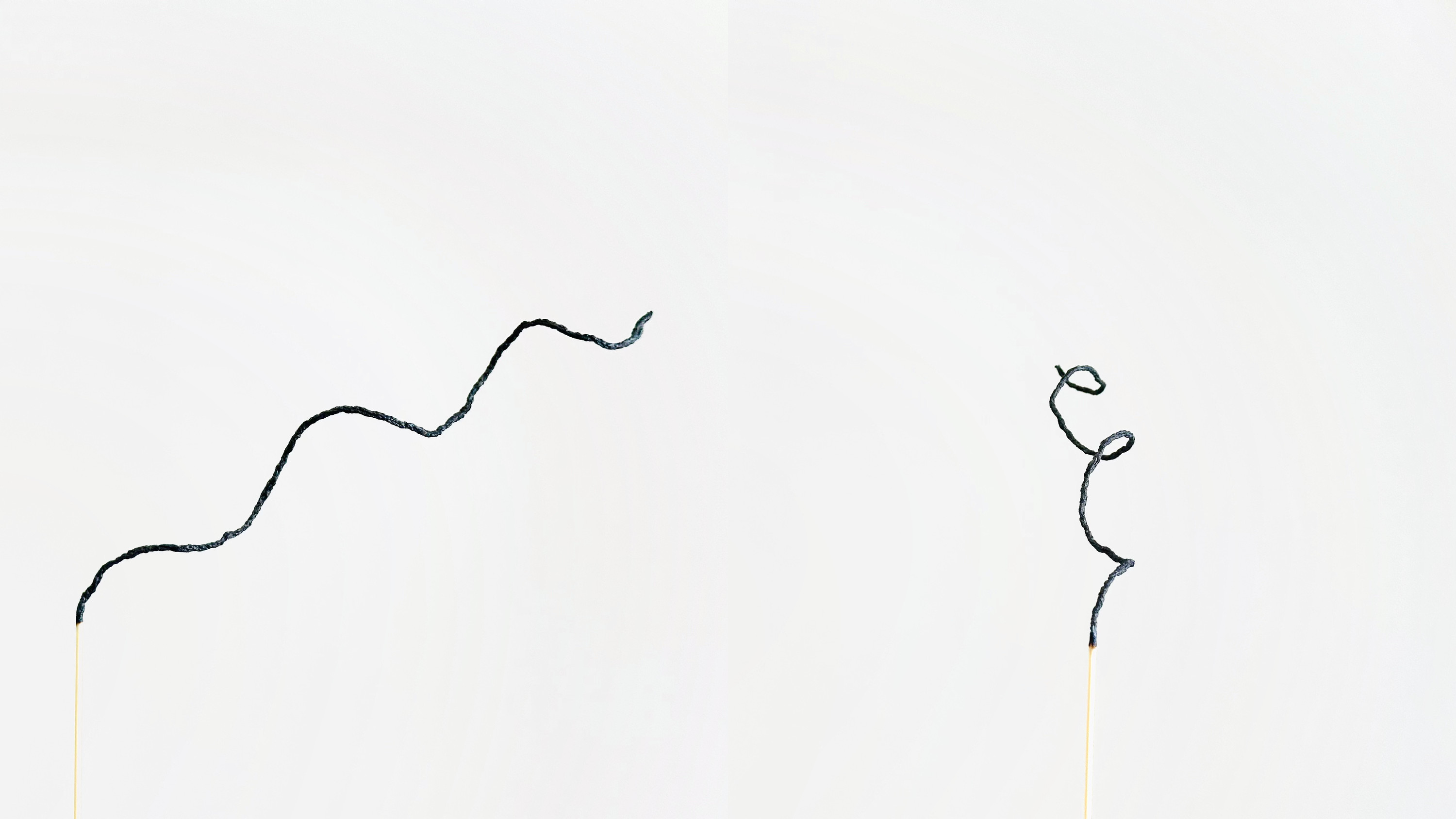
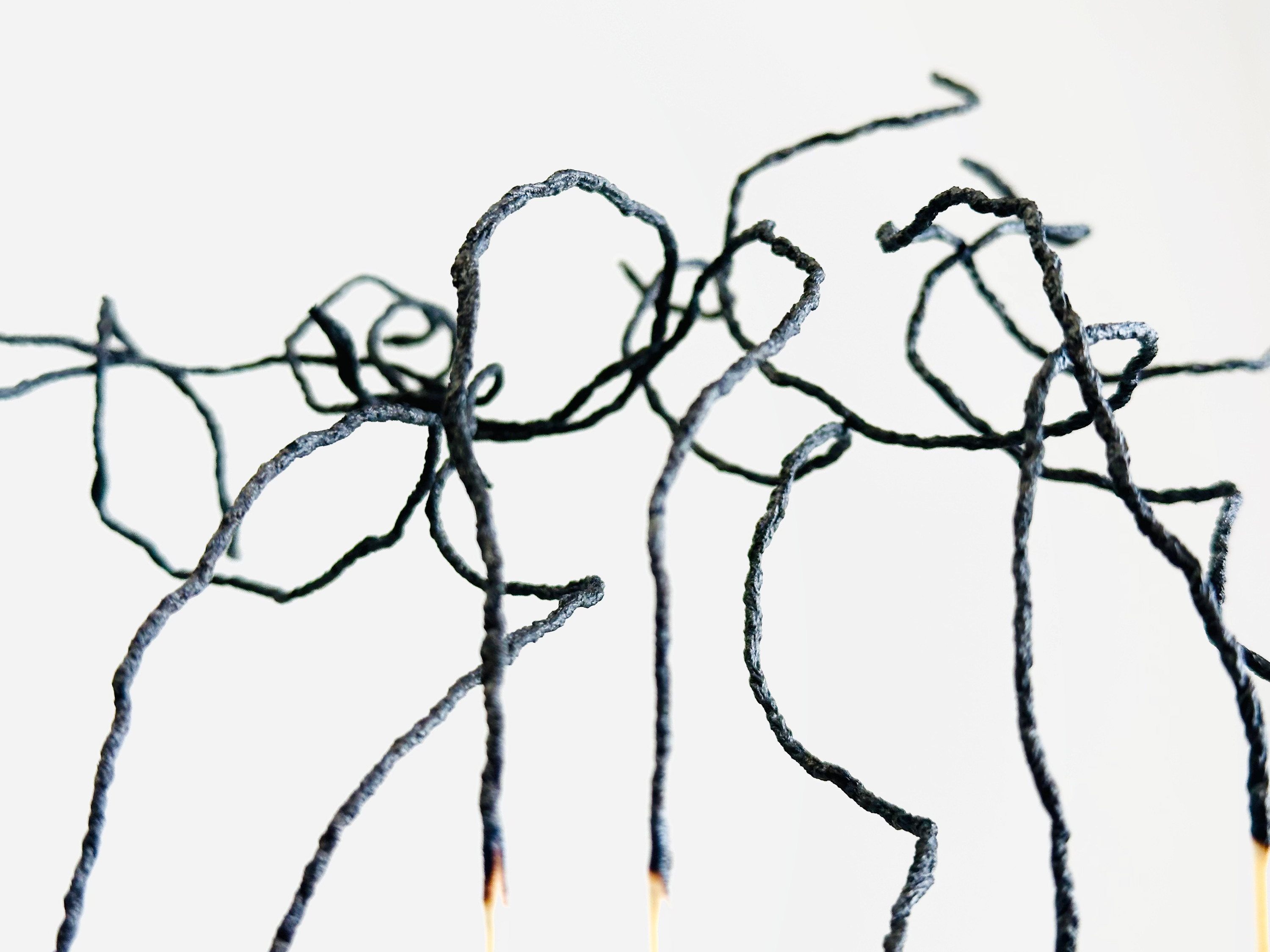
The bending, twisting, and fracturing of each noodle are not random. They result from interactions between the noodles' material qualities (softness, moisture content, thickness), their positions and angles, and the energy they absorb. One noodle burns into a continuous wave; another curls into small loops.
From one strand to a whole row: a chain reaction
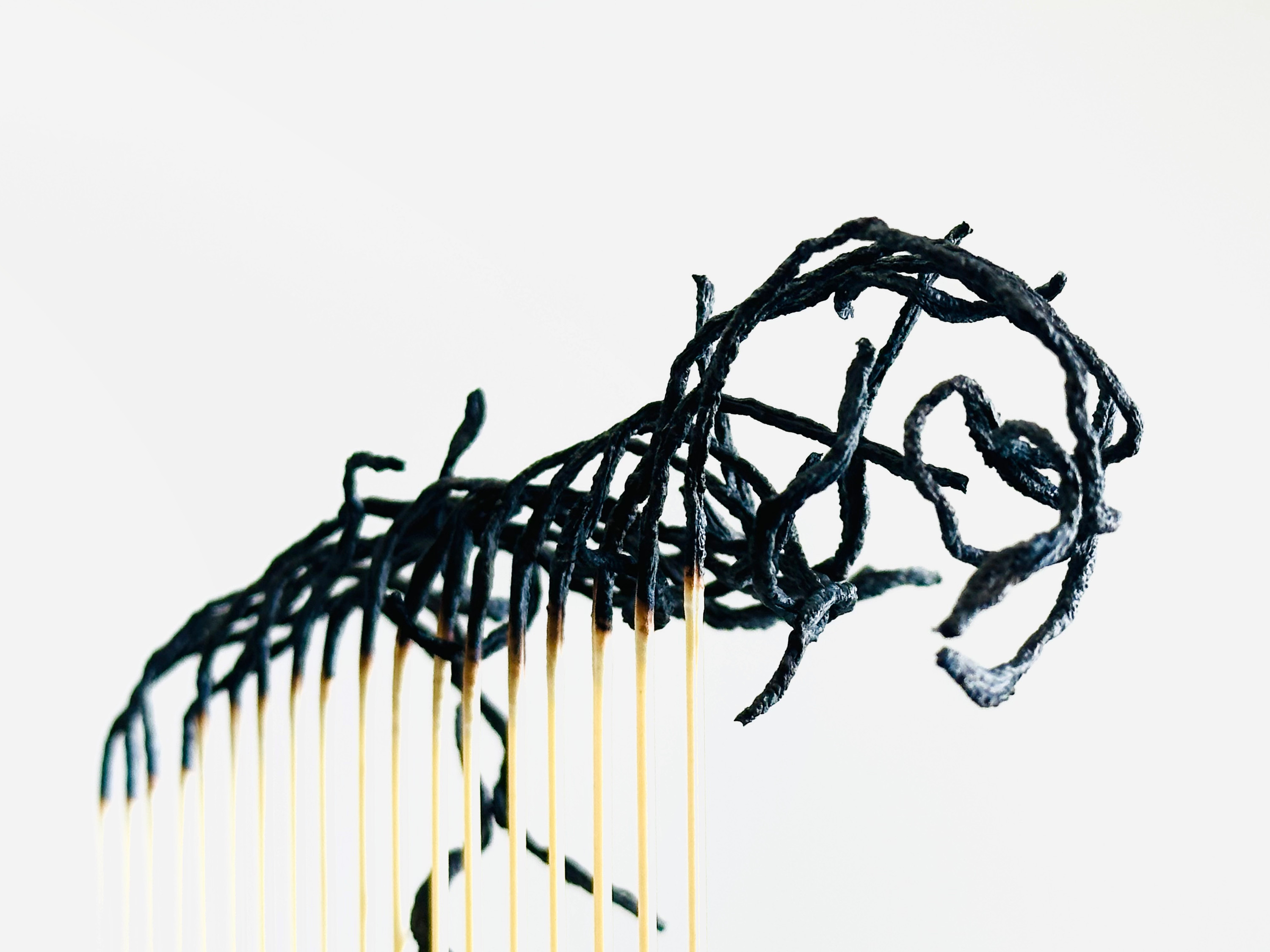
I then lined the noodles up densely so that they touched, and lit the row from one end. The fire moved from one noodle to the next as if it were being conducted, the heat passing through the material strand after strand. What happens is a chain reaction: the noodles affect one another, pull, push, and tangle, and each grows into a different form. They collide and push against one another, engaging in a dialogue within space.
Single, side by side, in clusters
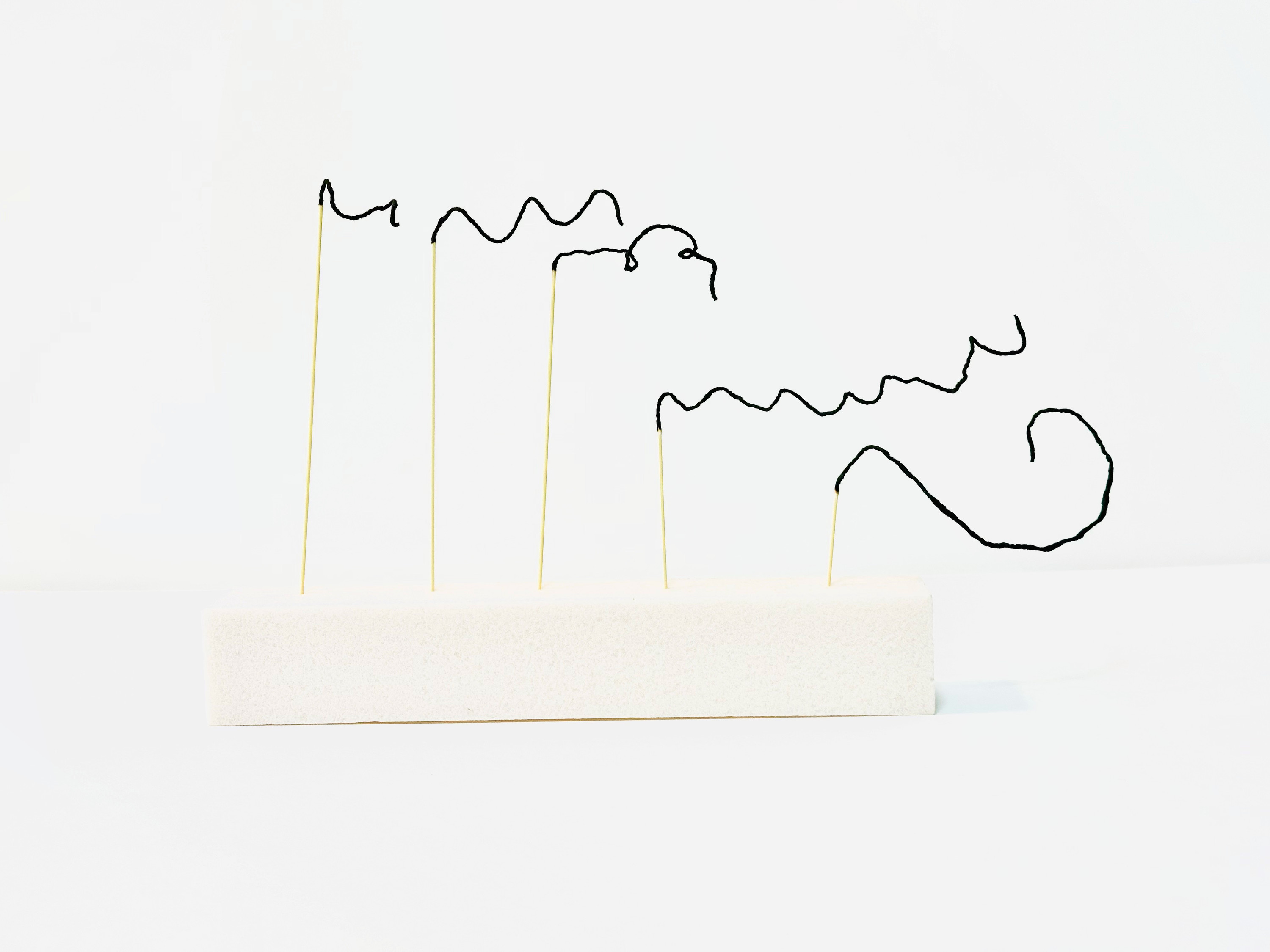
The work is presented through photographs and footage of the burning: lines drawn by single noodles, five noodles standing side by side in a white base, and a whole row that tangles into a cluster of black curves once the fire has passed. The charred section keeps a rough surface texture, while the lower part is still the noodle's original yellow: two states meeting in a single strand.
To me, these curves are the traces and trajectories that energy leaves as it flows through matter. The flow ends, but the form stays, still. This work was made during my exchange at Musashino Art University.