
2025 · 03Musashino Art University
[Musashino Art University] Before the semester, looking at the city again
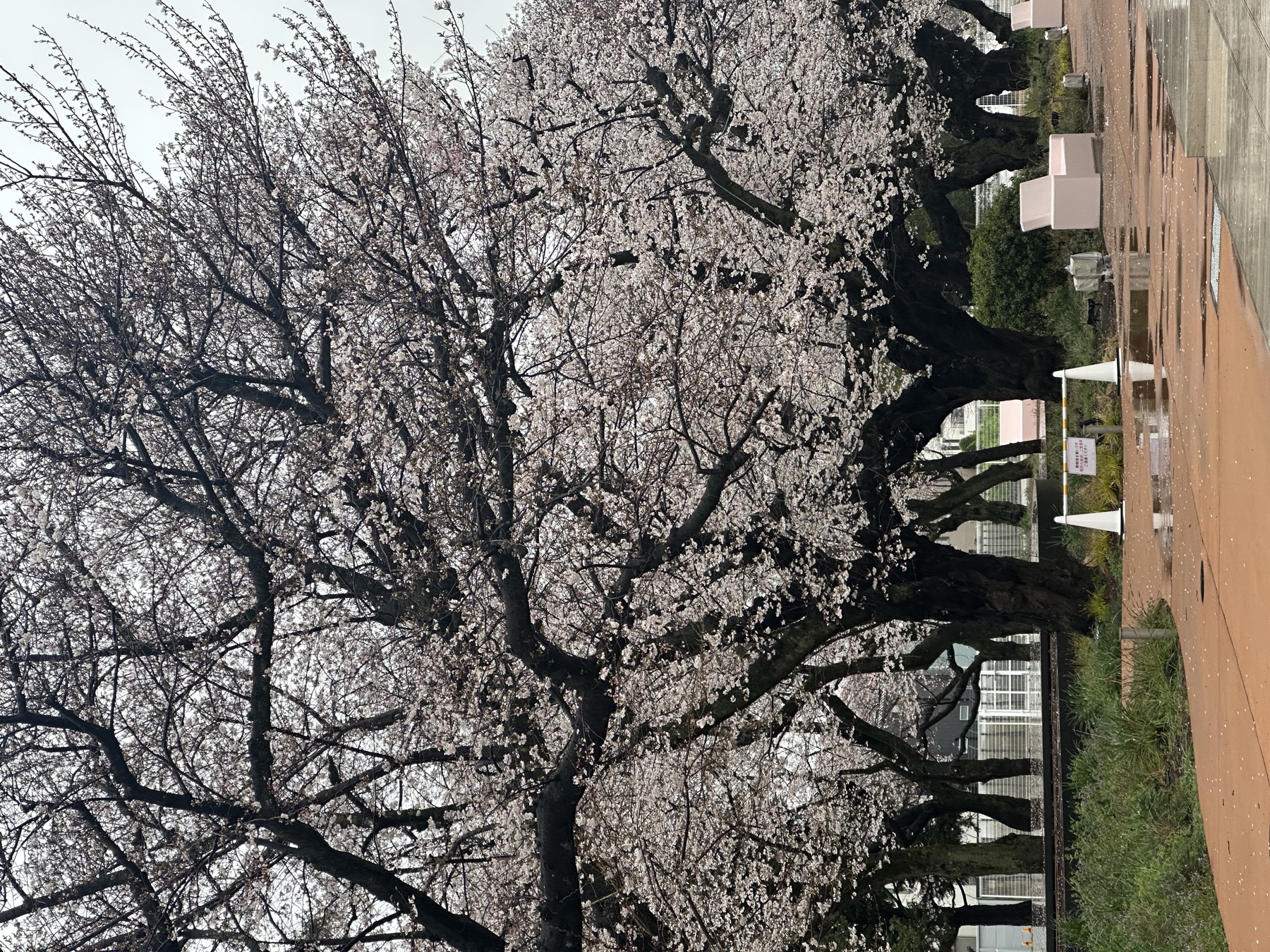
The cherry blossoms are out, and the nearly four-month winter break is coming to an end with them. The new semester starts next month!
With the last month of the break, I took a trip to Fukuoka, and also used the time to sort through what I made and learned last semester.
Looking back on last semester, beyond what I gained from my classes, simply living in a completely different culture has been a rare, eye-opening experience. Encountering so many new things has also given me a deeper understanding of different ways of living and of cultural differences.
Last semester’s courses centered mainly on graphic design and concept development. For me, it was a process of extending from “form” to “ideas.” In the coming semester, I want to focus more on three directions, “objects,” “brands,” and “technology,” and think about how to tightly link the “method” and the “meaning” of my work to deepen what it says.
Next semester’s courses:
Interface Design (インタフェイスデザイン)
This course approaches the design of artifacts from the angle of the “interface,” emphasizing user-centered design thinking. It’s a very practical course where you learn how to produce designs that are intuitive and close to people’s needs.
Product Environment Design (デザイン演習Ⅰg-プロダクト環境)
This course focuses on creating “form” and “meaning”: we practice giving an object a reason to exist and putting the possibilities of a design into words.
Visual Communication (ヴィジュアルコミュニケーション)
Taught by Professor Hara, this is a hands-on course focused on VI (visual identity) design. Each year has a different theme, such as a “hotel,” “museum,” “restaurant,” or “factory.” Students build a service story, name the facility or service, and design its logo, then go on to spatial planning, product details, and communication tools.
Seminar (Design Theory Practicum)
This course is required, so this semester I’ll continue the weekly discussions with my professor and carry on with the personal project I started last semester: a work that visualizes streets as color swatches, built around “light and sound.”
To deepen my understanding of this theme, I read People, Paths, and Purposes: Participatory Envirotecture Notations over winter break. It offers a framework for analyzing “space, place, and situation,” examining how people understand and respond to their surroundings through sensory experience, patterns of behavior, and participation in settings.
The book breaks the user’s experience into three basic components: space, place, and situation. These correspond to physical structure, social meaning, and actual activity.
Although humans have multiple sensory channels, the author points out that the visual system usually leads the process of perception. We build our overall understanding of space on vision, using input from the other senses to modify or supplement it. That is why, in actual experience, many non-visual stimuli (such as sounds or smells) end up becoming parameters that affect visual attention and interpretation. For example, a sudden noise may make us turn to look for its source, changing our visual focus and our sense of space.
The author also proposes the idea of layered, overlapping sensory spaces. The space we experience is really a perceptual whole woven from many sensory dimensions. A street, for example, may contain several spatial layers at once:
- Acoustic space: how the sounds of traffic and voices travel, reflect, and get blocked
- Visual space: the visual makeup of the streetscape, light and shadow, and building structures
- Olfactory space: where smells come from and how they spread (food, plants, exhaust)
- Thermal/tactile space: sunlight, moving air, and the feel of ground surfaces
By recognizing and integrating this sensory information, we build three core understandings of our environment:
- Affordances: the possibilities for action an environment offers; for example, steps suggest climbing and a chair suggests sitting.
- Behavior settings: a particular set of activities and social patterns that regularly happen in a space, such as lecturing and listening in a classroom, or reading and chatting in a café.
- Activities: what people are actually doing in the environment at that moment, the most direct expression of how people and space interact.
These cognitive mechanisms mean that users are not just passive receivers of sensory input but active agents who can interpret, adapt to, and take part in reshaping their environment.
Reading this book helped me better understand “environmental experience.” Its ideas about sensory sequences, overlapping spaces, and reading behavior helped me re-examine the relationship between people and the city, which is constantly flowing, with perception and action interweaving.