
2025 · 02Musashino Art University
[Musashino Art University] Not just seeing, but sensing
In the first half of February I went back to Taiwan for Lunar New Year and stepped away from school and making work for a while. After the break, time seemed to slow down, which gave me a chance to look back on what I had learned and made over the past few months and to rethink where I want to go. After returning to Tokyo at the end of February, I visited three exhibitions: “Machine Love: Video Game, AI and Contemporary Art,” “evala: Emerging Site / Disappearing Image,” and a teamLab exhibition. They got me thinking: how is technology changing the way we perceive art? Can future work break out of a vision-dominated framework and make sound, time, and interaction more central means of expression?
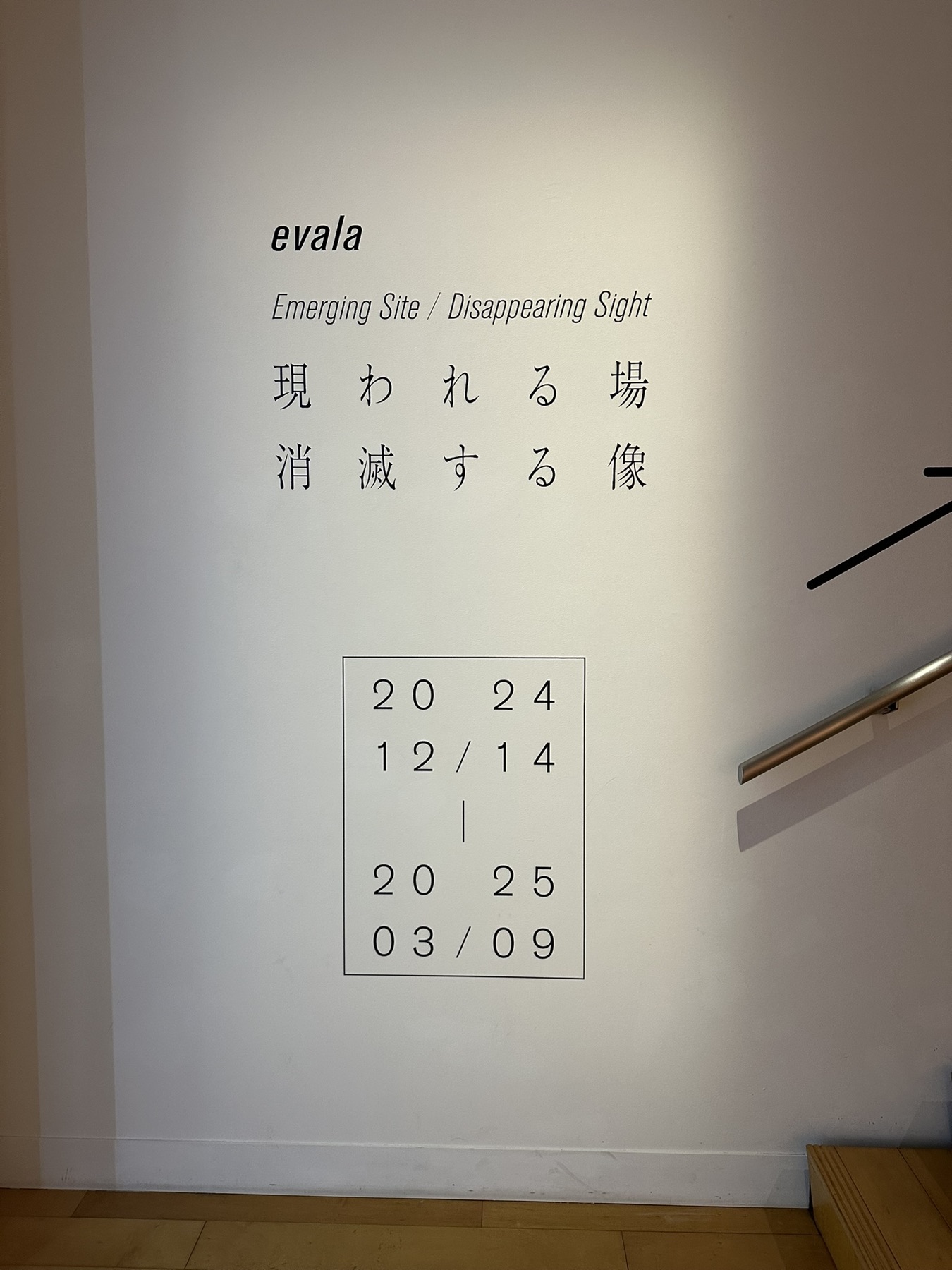
evala: Emerging Site / Disappearing Image
The evala exhibition is an art experience built purely out of sound. Walking into the space, there are no images or visual installations, only sound: surrounding you, crossing, vanishing, and recombining. Through a precisely calculated 3D sound field, it builds a space you can’t see but can feel.
“Sprout ‘fizz’” was one of the works that moved me most. Using speakers, it simulates water droplets evaporating, faint rustling in the grass, and even the tiny pop of bursting bubbles, creating a soundscape somewhere between reality and imagination. These small sounds feel light yet richly layered, as if you were in a garden no one has explored before. I closed my eyes and felt the sounds shift around me; in that moment, sound replaced sight and became my only way of perceiving.
Visitors can wander freely among a large number of original speakers in all kinds of shapes, wrapped in a space full of the feeling of new life.
Visitors can wander freely among a large number of original speakers in all kinds of shapes, wrapped in a space full of the feeling of new life.
Another work, “ebb tide,” merges the body with sound. In the middle of the room is an undulating sound-absorbing structure where visitors can lie down however they like and be completely immersed in sound. I lay there for almost half an hour with my eyes closed, feeling the sound flow.
The title means “ebb tide” and comes from a legend that people’s biological rhythms, including those tied to birth and death, are linked to the rise and fall of the tides. As you lie immersed in the sound, you feel as if the waves are drawing you somewhere far away, or as if you are watching something pass over rocks that only appear at low tide. For evala, the work is both a requiem for the dead and an expression of awe at the unbroken continuation of life.
(Photography wasn’t allowed in this room; in reality there were lots of people lying on it.)
(Image source: https://www.ntticc.or.jp/ja/archive/works/ebb-tide/)
At first I heard fine rain and breaking waves, occasional thunder with faint flashes of light, and some close-up sounds of breathing in, wind, cicadas, and birdsong. The experience made me realize that when sight is taken away, hearing is amplified and brings a more primal kind of perception. It was a feeling that’s hard to put into words. The way I understand it: in that moment I remembered that I exist on the Earth, in the universe, and not only in a city built by humans. It was an experience of being connected to everything, a feeling of briefly leaving the man-made world and returning to the rhythms of nature.
In the darkness, viewers hear a rumbling bass and see vast, constantly changing images. Faint light in the darkness becomes organically moving, amorphous images that combine with physical shadows and moiré patterns. The title “Embryo” suggests the beginning of something new, before boundaries exist between things.
MACHINE LOVE: Video Game, AI and Contemporary Art
In contrast to the evala exhibition, “Machine Love” is highly visual and focused on interaction and data. At its core, the exhibition explores how games and artificial intelligence are shaping contemporary art, and many of the works challenge the relationship between humans and machines, treating the machine not just as a creative tool but as an agent in making art.
In the exhibition, Taiwanese artist Hsu Chia-Wei’s “Silicon Serenade” features a sphere in the space wearing a VR headset. What you see is a floating virtual ocean, while a screen plays footage from Taiwan’s Industrial Technology Research Institute (ITRI) showing the research process behind AI chips, and underwater a musician plays the cello. Sound and image interweave, creating an atmosphere where poetry and technology blend. Through the VR setup and the lighting of a wafer fab, the work hints at how technology is refined out of the natural world. We tend to think of technology as virtual, but its foundation is the real, material world: silicon from the beach is refined into semiconductors, which in turn drive digital technology. Seen this way, we can rethink the materiality of technology and reflect on the relationship between humans, nature, and technology.
Her series of sculptures is inspired by radiolarians, ancient single-celled marine organisms with intricate skeletal structures. The sculptures move in subtle rhythms, as if floating in water, creating a visual and sensory experience where the organic and the mechanical merge. Exploring how living things and machines can coexist, her work presents a non-human perspective on intelligence, turning the machine into an organic element that adapts to its environment and responds to the viewer.
Her series of sculptures is inspired by radiolarians, ancient single-celled marine organisms with intricate skeletal structures. The sculptures move in subtle rhythms, as if floating in water, creating a visual and sensory experience where the organic and the mechanical merge. Exploring how living things and machines can coexist, her work presents a non-human perspective on intelligence, turning the machine into an organic element that adapts to its environment and responds to the viewer.
teamLab
Besides these two exhibitions, I also went to see teamLab, whose work has long been known for immersive digital art. The piece that impressed me most this time was “Infinite Crystal World.”
The work is a three-dimensional space made of countless points of light. From floor to ceiling it is filled with twinkling lights, surrounded by mirrors, so the whole space seems to extend infinitely. The approach is similar to pointillist painting: independent points of light form shifting images, creating an endlessly expanding group of light sculptures.
When I walked into the space, it felt as if I were swallowed by endless points of light. The mirrors all around made me lose my sense of direction, and every step felt like exploring a boundless universe. The changing lights were not just visually stunning; they also shifted my bodily perception, making me feel as if I were floating on waves of light.
Summary and Looking Ahead
This month I also reorganized and updated my portfolio website, sorting my past work into categories, adjusting how it’s presented, and thinking about where to go next. I also started some new personal projects, hoping to bring in some new ideas.
Next, I want to bring these new ideas into my own work and explore how a piece can be not just something you “look at” but something you can “sense”: seeing whether I can combine sound, interaction, time, and technology to find a design language that breaks out of the visual frame.