
2025 · 07Musashino Art University
[Musashino Art University] The ReBound presentation and my last class
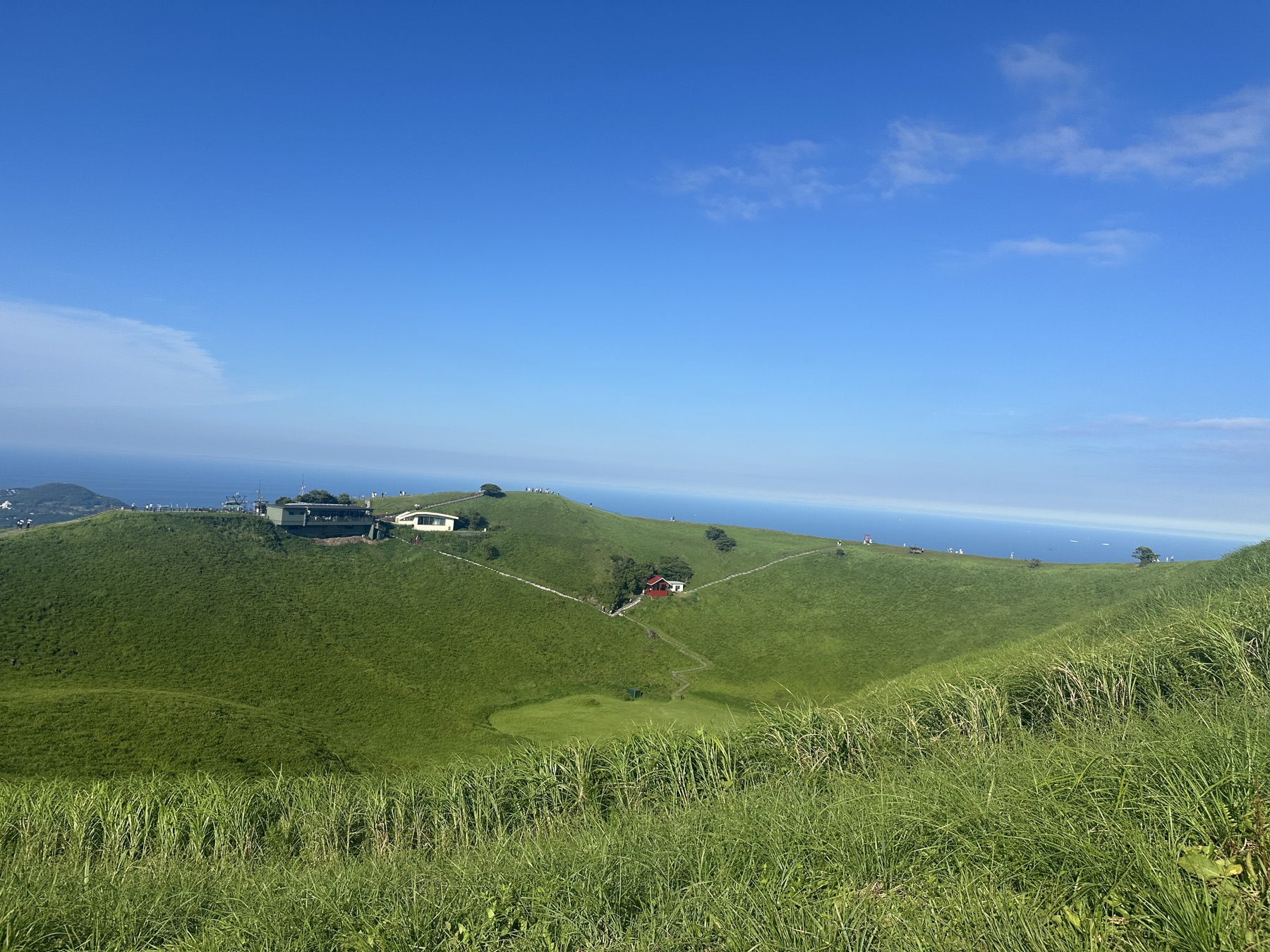
My own project was presented last month, but July was still the busiest time for class presentations, and it also marked my time studying abroad drawing to a close. During this time I was racing through the final presentations for each class while slowly trying to sort through what I'd experienced and felt here. After classes ended, my friends from the lab and I took a three-day trip to Izu, like a small graduation trip. I also went to my first-ever hanabi taikai (fireworks festival).
Product Environment Design
For the final presentation in Product Environment Design (Design Practicum Ig: Product Environment), I completed ReBound, a series of notebook designs that start from “the page-turning motion” and “the structure of a notebook.” The series includes seven notebooks, each with its own function and behavioral logic—connecting, displaying, counting down, overlapping, wrapping around, cycling, and wearable—and each one tries to use structure to redefine how we write.
I spent a lot of time on structural experiments for this work, especially the different forms of the wire binding: how should it hold the pages together? What role could it play while you write? I kept trying out different feels for turning pages and ways of opening and closing, and even forms of interaction like letting several people use one notebook at the same time. These experiments were the most important process in this class: first observe the potential use scenarios, then work backward to possible designs and forms.
The professor once told us: “Don't get boxed in by the logic of existing products. A lot of designs actually start from some accidental behavior, and from there discover and extend new possibilities.” It made me think that the reason Japan has so many small but ingenious stationery items, tools, and public facilities may be exactly this “observe first, then design” attitude: through experiment and perception, continually working out small changes that fit better and sit closer to everyday life.
Visual Communication
This month we finally gave the final presentation of our project, FUKUMO: an app service combining cloud storage and clothing rental, proposed as a response to social trends such as young people today wearing their clothes less often, rising demand for rentals, and growing environmental awareness. In Visual Communication (ヴィジュアルコミュニケーション), we weren't just “doing design”; we learned to think through an entire service structure, from brand positioning and user flow design to the app's interface visuals, the business model, and the marketing strategy.
Presentation day happened to fall on the school's Open Campus, so we added the Open Campus outfit to the app and had Professor Hara be the model, wearing a simulated rented uniform. This bit got an unexpectedly big reaction: it made everyone laugh and really grabbed the audience's attention. The experience made me realize that in a design presentation, “how to make it stick in people's memory” matters a lot. Visual impact, a story people can relate to, even well-placed humor—all of these can be designed. We had planned the pacing of the presentation in advance, and afterward we found that quite a few people had filmed parts of it and shared them on Instagram and other social platforms.
Seminar
Although my Seminar (Design Theory Practicum) work, Textures of Streets, was presented last month, the professor gave me a very important suggestion: this work could become my “Life Work,” a personal project I can keep building on and expanding over a long time. This month, whenever I went to Osaka or other places, I made a point of walking through different neighborhoods and recording the sound and light data of their streets.
Looking Back
Looking back on this month feels like looking back on the path of the whole past year.
From the strangeness and unease of first arriving, to now being able to present my work a bit more comfortably and discuss design in Japanese—all of this change happened almost without my noticing. This month, my last class in Japan ended. No more rushing to finish assignments or to catch the bus to school. Instead, I've started packing, getting ready to move out, and saying goodbye to the room and the neighborhood I've grown used to.
I can't quite describe the feeling: a little empty, a little relaxed, but mostly a sense of missing it before I've even left. Even the bus that always pulled away right in front of me now feels especially dear. Maybe this is what “ending” is. Not something dramatic, just suddenly turning around and seeing that you really have come a long way.